Terri Miller, Ph.D.
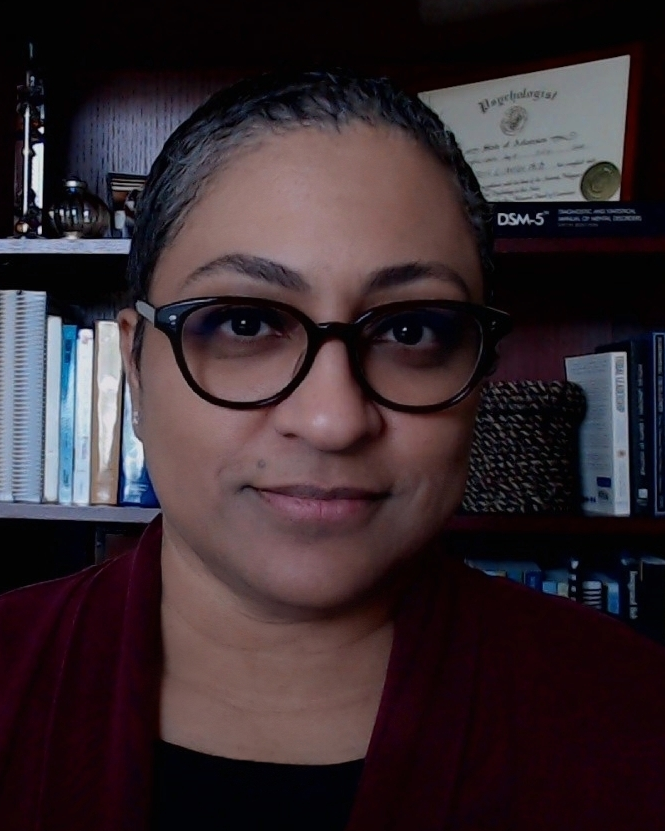
I’m a licensed clinical psychologist in Fayetteville, Arkansas, and I’m currently serving as Primary Care Mental Health Integration Program Manager at the Veterans Health Care System of the Ozarks. I have more than 25 years of experience working with individuals across the lifespan—adults as well as school-age children and adolescents—in outpatient, inpatient, residential and day treatment, community-based, correctional, primary care, and specialty medical care settings. Through this work, I’ve developed expertise in assessing a broad range of presenting problems using a variety of measures and protocols, along with the adaptability needed to apply them with diverse populations under varying conditions.
Comprehensive psychological assessments have been an area of emphasis for much of my career. I also have experience doing specialty assessments for more focused purposes. These have included evaluations for people who have filed claims for VA and Social Security disability benefits, as well as evaluations for people preparing for medical procedures such as bariatric surgery, organ transplants, and gender affirmation interventions. Additionally, I have experience providing both short- and long-term psychotherapy, primarily using cognitive behavioral, motivational interviewing, and solution-focused approaches and techniques.
My work in integrated care settings has highlighted the importance of effective multidisciplinary teamwork in making sure that service delivery models, clinical decision making processes, and individualized intervention plans are based on the best available evidence and standards of care, but are also firmly grounded in real-world experiences and are mindful of the resources available to people in their efforts to manage their health conditions. In this work, along with my work with disability claimants and presurgical patients, I’ve been uniquely positioned to help engage those in need of behavioral health support, many of whom have had little or no previous experience with mental health services. To be effective in these roles has required competence in psychological assessment, but also in risk assessment, crisis intervention, psychoeducation, treatment engagement and implementation, and interprofessional collaboration. It has also required a strong commitment to acting in and advocating for the best interests of people in need of care, and to treating them with sensitivity and compassion throughout processes that can in many ways be quite dehumanizing.
I’ve served as a manager for outpatient behavioral health and primary care mental health programs within major health care systems. In these roles, I’ve been responsible for administrative oversight of providers and services across a range of professional disciplines. I have a background in mental health services research, and have been a co-investigator for grant-funded projects focused on developing and evaluating measures of quality and outcomes of care. I’ve also been a program evaluation consultant to school- and community-based programs in their efforts to monitor and improve their processes and outcomes.
I have a strong interest in and commitment to behavioral health-related education and training. I have many years of experience in working with predoctoral psychology interns through two APA-approved programs, as well as experience working with psychology practicum students, and I have supervisor status with the Arkansas Psychology Board. I’ve conducted professional development activities for trainees and professionals in psychology, psychiatry, family medicine, and mental health services research on cultural competence in behavioral health practice, use of psychological screening measures in routine care, and other relevant topics.
I’ve served as a community educator on a range of behavioral health issues, particularly those affecting underserved populations, with the aim of empowering individuals, groups, and families to effectively advocate for their needs and to manage their own health. I have a profound appreciation of the challenges faced by individuals and their families in accessing behavioral health care and those faced by providers in offering an array of high-quality services to meet clients’ needs, as well as an interest in building strategies for overcoming them. I also have a heightened awareness of the unique barriers encountered by military veterans and by those who seek to serve them.
The greatest strengths that I have to offer the clients with whom I work and the systems within which I serve them are my ability to think critically; to analyze and synthesize large volumes of information; to take a thorough, organized, systematic, evidence-based approach to conceptualizing and addressing questions and problems; to communicate effectively orally and in writing; and to help people find practical strategies for improving their individual and organizational health and well-being.